Buying aftermarket heavy duty truck parts requires verifying vehicle compatibility, material quality, mounting specifications, warranty coverage, and supplier availability. Replacement hoods, bumpers, grilles, and fairings must fit correctly to support efficient installation and reliable performance. Comparing technical specifications and total installed costs before ordering helps commercial operators avoid incorrect purchases, unnecessary modifications, and repair delays.
Key Takeaways
- Verify OEM part numbers, vehicle identification numbers (VINs), model years, and configurations before ordering aftermarket components.
- Compare mounting locations, dimensions, material specifications, and included hardware to confirm compatibility.
- Evaluate fiberglass, steel, aluminum, and composite components according to their intended applications and manufacturer requirements.
- Account for freight, surface preparation, refinishing, additional hardware, and installation labor when calculating replacement costs.
- Confirm inventory, warranty coverage, shipping requirements, and return policies before purchasing through Guardian Heavy Duty or another supplier.
Core Factors to Evaluate in Aftermarket Commercial Parts
The most important factors when selecting aftermarket heavy duty truck parts are accurate fitment, material quality, component construction, supplier reliability, and total installed cost. A lower purchase price may not provide meaningful savings if a replacement requires extensive modifications or additional installation labor.
Aftermarket components are manufactured by companies other than the vehicle’s original equipment manufacturer (OEM). Their specifications, quality, and compatibility can vary between manufacturers, even when parts are advertised for the same truck model.
The Complete Aftermarket Parts Buying Checklist
| Purchasing factor | What to verify | Why it matters |
| Vehicle compatibility | Year, make, model, VIN, and configuration | Reduces incorrect orders |
| Part numbers | OEM references and aftermarket cross-references | Helps identify compatible replacements |
| Dimensions | Length, width, mounting points, and clearances | Supports accurate installation |
| Materials | Fiberglass, steel, aluminum, or engineered composites | Affects weight, durability, and repair requirements |
| Included hardware | Brackets, hinges, fasteners, and mounting components | Identifies additional installation needs |
| Surface finish | Primed, unfinished, or prefinished condition | Determines preparation and painting requirements |
| Warranty | Coverage, exclusions, and claims procedures | Clarifies manufacturer and supplier protections |
| Availability | Inventory status, shipping method, and delivery estimate | Supports repair scheduling |
Buyers should request written compatibility confirmation whenever a product listing lacks sufficient technical information.
Component-Specific Sourcing: Hoods, Bumpers, Grilles, and Fairings
Each commercial truck body component has distinct fitment, construction, and installation requirements. Replacement parts should be evaluated according to their function, attachment points, and compatibility with surrounding vehicle systems.
Heavy-Duty Replacement Hoods
Replacement truck hoods must accommodate the vehicle’s cab configuration, hinge assemblies, latches, grille openings, and adjacent body panels.
Before purchasing, verify:
- Hood dimensions and applicable vehicle configuration
- Hinge and latch mounting locations
- Headlight and grille opening compatibility
- Required brackets and mounting hardware
- Material composition and shipping condition
A hood advertised for a particular truck model may not fit every production year or equipment configuration.
Commercial Truck Bumpers
Heavy-duty replacement bumpers must match the vehicle’s mounting structure and applicable equipment requirements.
Buyers should check mounting brackets, tow-hook openings, lighting provisions, sensor locations, and clearance around adjacent components.
A bumper’s appearance does not establish structural equivalence or compatibility with the vehicle’s safety systems.
Grilles and Aerodynamic Side Fairings
Replacement grilles must fit the designated hood opening while maintaining the vehicle manufacturer’s required airflow characteristics.
Aerodynamic fairings require accurate mounting positions and sufficient clearance from doors, tires, exhaust components, and surrounding equipment.
Incorrectly fitted fairings can create vibration, attachment problems, or interference during vehicle operation.
How Can You Verify Aftermarket Parts Fitment Before Ordering?
Quick Summary: To verify aftermarket heavy-duty truck parts before ordering, cross-reference the vehicle’s VIN, model year, and OEM part numbers. Compare physical dimensions, mounting point configurations, material specifications, and included hardware with the original component to prevent installation delays and unexpected modification costs.
Vehicle make and model are useful starting points, but they may not identify the correct replacement for every commercial truck configuration.
The 6-Step Parts Verification Sequence
- Identify the vehicle: Record the VIN, year, make, model, and relevant equipment configuration.
- Locate original part numbers: Identify OEM references from the existing component or manufacturer documentation.
- Cross-reference replacements: Compare aftermarket part numbers against documented OEM applications.
- Check technical specifications: Review dimensions, mounting locations, materials, and surrounding component clearances.
- Confirm installation requirements: Determine whether additional hardware, brackets, or manufacturer-approved modifications are necessary.
- Verify supplier terms: Obtain confirmation of compatibility, inventory, warranty coverage, and return conditions.
Expert Pro-Tip: For collision-related parts such as hoods, bumpers, grilles, and fairings, fitment accuracy affects more than appearance. Incorrect mounting configurations or dimensional differences can complicate installation, interfere with surrounding components, and increase repair costs.
Material Durability Comparison: Fiberglass, Steel, Aluminum, and Composites
The best replacement material depends on the component’s intended function, manufacturer specifications, and operating environment. Steel, aluminum, fiberglass, and engineered composites have different weight, corrosion, construction, and repair characteristics.
| Material | Common characteristics | What buyers should verify |
| Steel | Strong construction; weight and corrosion exposure vary | Thickness, coatings, and mounting specifications |
| Aluminum | Lower weight than comparable steel components; corrosion resistant | Alloy, construction, and approved repair procedures |
| Fiberglass | Moldable construction commonly used for truck hoods | Laminate quality, reinforcement, and surface finish |
| Engineered composites | Application-specific weight and durability characteristics | Manufacturer specifications and repair limitations |
A heavier component is not automatically more durable, and a lighter replacement is not necessarily less suitable.
Material selection should follow the vehicle manufacturer’s requirements and the replacement component manufacturer’s technical documentation.
Regional Freight Logistics Across Colorado and Southern Wyoming
Regional sourcing decisions should account for parts availability, freight handling, delivery timelines, and repair scheduling. Large commercial truck components can require specialized packaging and transportation, making supplier location and inventory confirmation relevant purchasing considerations.
Sourcing Heavy-Duty Parts Along the I-25 and US-85 Freight Corridors
Commercial fleets operating along Interstate 25, US Highway 85, and US Highway 34 connect agricultural, construction, industrial, and regional freight operations throughout Northern Colorado.
Routes linking Greeley with Fort Collins, Denver, and Cheyenne, Wyoming, also expose vehicles to road debris, hailstorms, strong winds, snow, and ice. These conditions can contribute to damage involving hoods, grilles, bumpers, and exterior body panels.
Fleet Collision Services is headquartered in Greeley, Colorado, providing a regional point of contact for commercial operators evaluating aftermarket collision parts.
Access to a regional supplier can simplify communication and parts coordination. However, actual delivery timelines depend on confirmed inventory, component availability, freight arrangements, and the customer’s location.
Guardian Heavy Duty Inventory and Loaner Hood Program
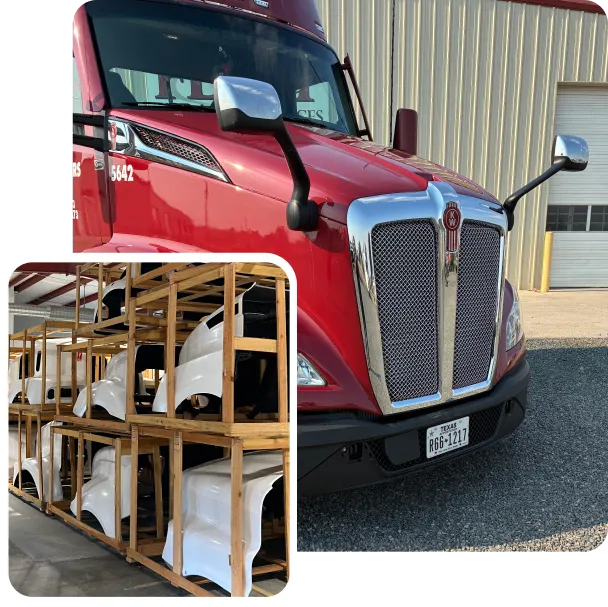
Fleet Collision Services offers Guardian Heavy Duty aftermarket collision parts, including replacement hoods, bumpers, grilles, fairings, and related commercial vehicle components.
Customers should confirm specific part availability, vehicle compatibility, current pricing, and warranty terms before ordering. Inventory should not be assumed based solely on a component’s listing or manufacturer association.
Loaner Hood Availability for Eligible Customers
Fleet Collision Services also offers a commercial truck loaner hood program for eligible customers with specific hood replacement needs.
Program availability, eligibility, applicable vehicle configurations, and participation conditions must be confirmed directly.
For replacement components requiring professional refinishing, the company’s Greeley facility includes a 60-foot downdraft paint booth designed to accommodate large commercial vehicles.
How Can Buyers Avoid Hidden Costs When Ordering Aftermarket Truck Parts?
The total cost of aftermarket heavy-duty truck parts includes more than the component’s advertised price. Freight, preparation, refinishing, mounting hardware, and installation labor can significantly affect the final expense.
Total Installed Cost Formula
Total Installed Cost = Part Price + Freight + Required Hardware + Surface Preparation/Refinishing + Installation Labor
| Cost category | Potential expense | Purchasing consideration |
| Component | Replacement part purchase price | Compare specifications, not price alone |
| Freight | Oversized shipping and special handling | Confirm delivery charges and requirements |
| Hardware | Brackets, hinges, fasteners, or adapters | Determine what is included |
| Refinishing | Preparation, primer, paint, and finishing | Verify the supplied surface condition |
| Installation | Labor and required fitment adjustments | Confirm compatibility before scheduling |
| Downtime | Lost vehicle availability during repair | Coordinate delivery and installation timing |
An unfinished replacement hood, for example, may require surface preparation and painting before installation.
Fleet managers should request itemized estimates and confirm anticipated parts lead times before scheduling repairs.
Frequently Asked Questions
Are aftermarket heavy-duty truck parts as reliable as OEM parts?
Aftermarket quality varies by manufacturer, component, and intended application. Buyers should verify material specifications, fitment, warranty coverage, and applicable performance requirements rather than assume every aftermarket component is equivalent to its OEM counterpart.
Can I order a replacement truck hood using only the model number?
A truck model number alone may not identify the correct replacement hood. Confirm the model year, vehicle configuration, OEM reference numbers, hinge locations, and other fitment specifications before ordering.
Do aftermarket heavy-duty truck parts come with warranties?
Warranty availability and coverage depend on the manufacturer and supplier. Request written warranty terms, exclusions, return restrictions, and claims procedures before purchasing.
Where can I buy aftermarket heavy-duty truck parts in Greeley, Colorado?
Fleet Collision Services offers aftermarket replacement hoods, bumpers, grilles, fairings, and related collision components through Guardian Heavy Duty. Call (970) 356-2208 to discuss compatibility, availability, and ordering, or read our local client reviews in Greeley.
Fleet Collision Services is a commercial truck collision and body repair company headquartered in Greeley, Colorado, serving fleet managers, trucking companies, independent owner-operators, and commercial vehicle owners throughout Colorado, Southern Wyoming, and across the United States. We provide specialized commercial vehicle body repair, collision repair, frame repair, painting and refinishing, complete restorations, fabrication, hail repair, and related services for heavy-duty and commercial vehicles. Our Guardian Heavy Duty offering includes aftermarket collision parts such as replacement hoods, bumpers, grilles, fairings, and other components, while our loaner hood program supports eligible customers with specific hood replacement needs. Our Greeley facility is equipped for large commercial vehicle repairs, including a 60-foot downdraft paint booth.