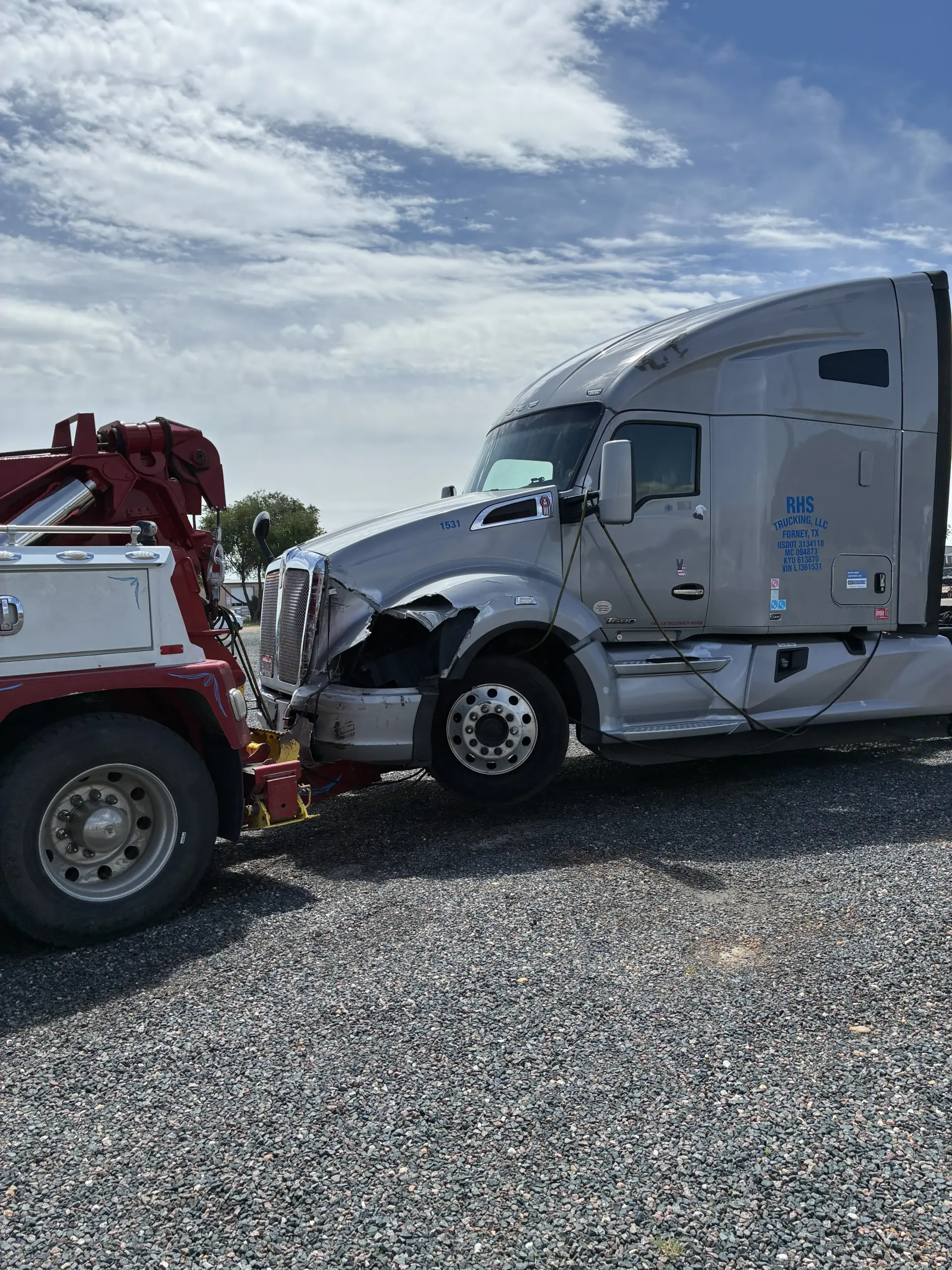
To reduce fleet vehicle downtime, fleet managers should track total out-of-service hours, prioritize repairs by operational urgency, identify replacement parts early, and coordinate repairs with qualified commercial collision facilities. Solutions such as locally stocked replacement parts and temporary loaner hoods can also help keep eligible trucks operating while repairs are completed.
Key Takeaways
- Measure total downtime from when a vehicle becomes unavailable until it is cleared to return to service, including administrative and parts-related delays.
- Prioritize collision repairs according to route commitments, vehicle utilization, replacement capacity, and operational urgency.
- Locally stocked collision parts can shorten procurement delays and reduce shipping-related costs.
- Fleet Collision Services’ loaner hood program allows eligible trucks to remain in operation while their damaged hoods are repaired or replaced.
- Establish fleet contingency plans, repair authorization limits, and consistent status reporting before collisions occur.
Measuring the Real Cost of Commercial Vehicle Downtime
Commercial vehicle downtime includes more than the hours spent performing collision repairs. Fleet managers must account for recovery, damage assessment, repair authorization, parts procurement, scheduling, and final inspections when evaluating operational losses.
Wrench Time vs. Total Out-of-Service Time
Wrench time refers to the labor hours technicians spend actively performing repairs. Total out-of-service time measures the entire period a vehicle remains unavailable for its intended operations.
A truck requiring 20 hours of repair labor could remain unavailable for several days if replacement parts, insurance approvals, or facility scheduling create additional delays.
Commercial Vehicle Total Downtime Formula
Total Downtime = [Return-to-Service Timestamp] − [Out-of-Service Timestamp]
Total downtime includes roadside recovery, estimated approval delays, replacement parts lead time, active repairs, and required inspections, not just repair labor hours.
For example, a truck removed from service Monday at 8:00 a.m. and cleared for operation Thursday at 8:00 a.m. experiences 72 hours of total downtime, regardless of how many hours technicians spent performing repairs.
Fleet managers can calculate average downtime by dividing total out-of-service hours by the number of completed collision repair events during a defined reporting period.
Key Downtime Stages to Track
Tracking individual repair stages helps fleet managers identify recurring delays and improve future repair coordination.
| Downtime Stage | What to Track | Delay Prevention Strategy |
| Initial assessment | Time until damage evaluation | Provide complete vehicle records |
| Repair authorization | Approval turnaround time | Assign an authorized decision-maker |
| Parts procurement | Availability and delivery estimates | Identify long-lead-time parts early |
| Repair scheduling | Time awaiting labor or equipment | Coordinate repair stages in advance |
| Active repairs | Bodywork, fabrication, refinishing | Consolidate compatible services |
| Final verification | Inspections and release approval | Plan return-to-service requirements |
Fleet managers should also distinguish direct repair expenses from operational downtime costs.
Temporary vehicle rentals, additional transportation expenses, overtime, and lost contribution margin from unfulfilled work may contribute to the financial impact. These figures should be documented separately to avoid double-counting.
4 Strategies to Shorten Fleet Collision Turnaround
Reducing fleet collision turnaround requires coordinated decisions about vehicle priority, replacement parts, repair capabilities, and administrative approvals. The following four strategies address common sources of avoidable delays.
1. Prioritize Vehicles by Route and Operational Urgency
Repair priority should reflect how strongly a vehicle’s absence affects daily operations.
A truck assigned to time-sensitive deliveries may require earlier scheduling than equipment with available replacements.
Fleet managers should evaluate:
- Vehicle utilization and scheduled route commitments
- Availability of compatible replacement equipment
- Damage severity and anticipated repair complexity
- Customer delivery obligations and contractual deadlines
- Estimated parts lead times and repair scheduling
Prioritization does not mean bypassing necessary repairs or safety inspections. It means allocating fleet resources and coordinating repair decisions according to operational needs.
2. Reduce Parts Delays With Guardian Heavy Duty and Loaner Hoods
Replacement parts availability can significantly affect commercial truck collision repair timelines. Waiting for hoods, bumpers, fairings, or other components to arrive may keep a truck out of service even when the repair facility is ready to begin work.
At Fleet Collision Services, we help address these challenges through locally stocked Guardian Heavy Duty collision parts and our loaner hood program, which can allow eligible trucks to continue operating during hood repairs.
Guardian Heavy Duty: Locally Stocked Collision Parts in Greeley
Through our Guardian Heavy Duty aftermarket parts program, we stock replacement hoods and commercial truck collision parts directly in our Greeley, Colorado warehouse.
Our inventory includes:
- Replacement truck hoods
- Bumpers and grilles
- Fairings and fenders
- Fuel tanks and straps
- Headlights and related collision components
Having many of these parts available locally allows us to begin eligible repairs without waiting for components to ship from distant suppliers.
This can help reduce repair turnaround times and overall costs by limiting parts-related delays and shipping expenses.
Our team can also coordinate parts selection, painting, and installation, helping fleet managers streamline multiple stages of the repair process.
Loaner Hood Program: Keep Your Truck Running During Repairs
A damaged truck hood does not always mean the entire vehicle must remain out of service throughout the repair process.
Our commercial truck loaner hood program allows qualifying customers to use a temporary replacement hood while we repair or replace their original hood.
Here’s how the program works:
- Contact our team: Provide the truck’s make, model, year, and photographs of the damage.
- Confirm availability: We check whether a compatible loaner hood is available.
- Install the loaner hood: If the truck is otherwise safe to operate, we fit the temporary hood.
- Continue operations: The truck can return to eligible work while we repair or replace the original hood.
- Complete the final swap: Once the repaired or replacement hood is ready, we schedule the truck’s return for installation.
This approach can substantially reduce operational downtime because the truck does not necessarily need to remain at the repair facility throughout the entire hood repair process.
The program is particularly useful for trucks with damage primarily affecting the hood. Vehicles with significant structural, suspension, or cab damage may require additional repairs before they can safely return to service.
Loaner hood availability depends on truck compatibility and current inventory. Additional labor charges and program conditions apply.
Expert Tip: Minimizing downtime begins before repairs start. Early damage assessments, readily available replacement parts, and temporary equipment solutions can help prevent avoidable interruptions. Fleet managers should ask about parts inventory and loaner programs during their initial repair consultation.
3. Consolidate Multi-Stage Repairs in a Single Heavy-Duty Facility
Coordinating multiple repair services through one qualified facility may reduce unnecessary vehicle transfers and simplify communication.
Commercial collision damage can require bodywork, frame repair, fabrication, painting, and refinishing.
At Fleet Collision Services, our Greeley facility supports these specialized commercial vehicle repair requirements.
Our equipment includes a 60-foot downdraft paint booth designed to accommodate large commercial vehicle refinishing projects.
With Guardian Heavy Duty parts stocked locally, our team can also coordinate compatible replacement components with painting and installation, potentially reducing delays between repair stages.
Fleet managers should confirm which services can be completed on-site, which require outside coordination, and how repair stages will be scheduled.
4. Standardize Status Reporting and Approval Limits
Consistent repair communication helps prevent delays caused by unanswered questions, missing authorizations, and unclear scheduling expectations.
Fleet managers should designate one representative to coordinate repair decisions and maintain a current vehicle status record.
Each repair update should identify:
- Current repair stage and completed work
- Outstanding parts orders or approvals
- Newly discovered damage affecting the repair scope
- Changes to anticipated completion dates
- Remaining inspections or release requirements
Predefined authorization limits can also reduce administrative delays by clarifying which repairs require additional management approval.
Any approval process should remain consistent with company policies, insurance requirements, and applicable repair obligations.
Regional Freight Logistics: Reducing Delays in Northern Colorado
Regional repair logistics affect total downtime because towing distances, driver transportation, equipment staging, and replacement vehicle availability can influence how quickly operations resume.
Fleet managers should consider a repair facility’s location relative to established freight routes and available fleet resources.
Regional Logistics: Staging Repairs Along the I-25 and US-85 Freight Corridors
Fleet Collision Services is headquartered in Greeley, Colorado, with access to US Highway 85, US Highway 34, and Interstate 25.
These transportation corridors connect commercial operators throughout Northern Colorado and support freight, agricultural transportation, construction fleets, and industrial vehicle operations.
For fleet managers coordinating vehicles across Greeley, Fort Collins, Denver, and Cheyenne, repair location can influence:
- Towing and commercial vehicle transportation requirements
- Driver pickup and reassignment arrangements
- Replacement vehicle staging and dispatch coordination
- Parts transportation and delivery logistics
- Scheduling around established freight routes
Our locally stocked Guardian Heavy Duty parts provide an additional advantage for regional operators by reducing dependence on long-distance parts shipments when compatible components are available.
Our Greeley facility serves commercial vehicle customers throughout Colorado, Southern Wyoming, and across the United States. Individual repair arrangements should be confirmed directly with our team.
Building a Pre-Accident Fleet Contingency Plan
A fleet contingency plan establishes how operations will continue when commercial vehicles become unavailable. Preparing these procedures in advance reduces the number of decisions required during an unexpected repair event.
Maintain Accurate Vehicle and Repair Records
Fleet managers should maintain accessible records containing vehicle identification numbers, configurations, maintenance histories, and relevant equipment specifications.
These records help repair facilities evaluate compatibility and identify necessary replacement components.
Establish Backup Vehicle and Dispatch Procedures
Identify rental providers, compatible spare equipment, and vehicle reassignment options before disruptions occur.
Fleet managers should also identify repair providers offering temporary solutions, such as loaner hoods, that may allow otherwise roadworthy vehicles to remain operational during certain repairs.
Review Seasonal and Regional Repair Risks
Colorado and Southern Wyoming experience hailstorms, snow, ice, strong winds, and road debris that can contribute to commercial vehicle damage.
Fleet managers should account for these conditions when reviewing equipment availability, maintenance schedules, and backup transportation arrangements.
Evaluate Downtime Performance After Repairs
After each completed collision repair, compare actual downtime against the original estimate.
Document delays involving approvals, replacement parts, scheduling, and final inspections. These records can guide future vendor coordination and fleet contingency planning.
Frequently Asked Questions (FAQ)
What is the difference between repair time and total fleet vehicle downtime?
Repair time measures the labor or elapsed time associated with completing repairs, depending on how the facility reports it. Total fleet vehicle downtime includes the entire period the vehicle is unavailable, including recovery, authorizations, parts delays, repairs, and required inspections.
Can a semi-truck keep operating while its damaged hood is being repaired?
Yes, some trucks can remain operational with a compatible temporary loaner hood if the vehicle is otherwise safe to drive. Fleet Collision Services offers a loaner hood program that allows eligible customers to continue using their trucks while their original hoods are repaired or replaced.
How can locally stocked aftermarket truck parts reduce repair downtime?
Locally stocked aftermarket parts can eliminate certain shipping delays and reduce parts procurement costs when compatible components are available. Fleet Collision Services stocks Guardian Heavy Duty hoods and collision parts in its Greeley warehouse to help accelerate eligible repairs.
Where can fleet managers find heavy-duty collision repair services in Northern Colorado?
Fleet Collision Services provides commercial truck collision repair, fabrication, refinishing, Guardian Heavy Duty replacement parts, and a loaner hood program at its Greeley, Colorado facility. Call (970) 356-2208 to discuss repair requirements, or read our local client reviews in Greeley.
Fleet Collision Services is a commercial truck collision and body repair company headquartered in Greeley, Colorado, serving fleet managers, trucking companies, independent owner-operators, and commercial vehicle owners throughout Colorado, Southern Wyoming, and across the United States. We provide specialized commercial vehicle body repair, collision repair, frame repair, painting and refinishing, complete restorations, fabrication, hail repair, and related services for heavy-duty and commercial vehicles. Our Guardian Heavy Duty offering includes aftermarket collision parts such as replacement hoods, bumpers, grilles, fairings, and other components, while our loaner hood program supports eligible customers with specific hood replacement needs. Our Greeley facility is equipped for large commercial vehicle repairs, including a 60-foot downdraft paint booth.