
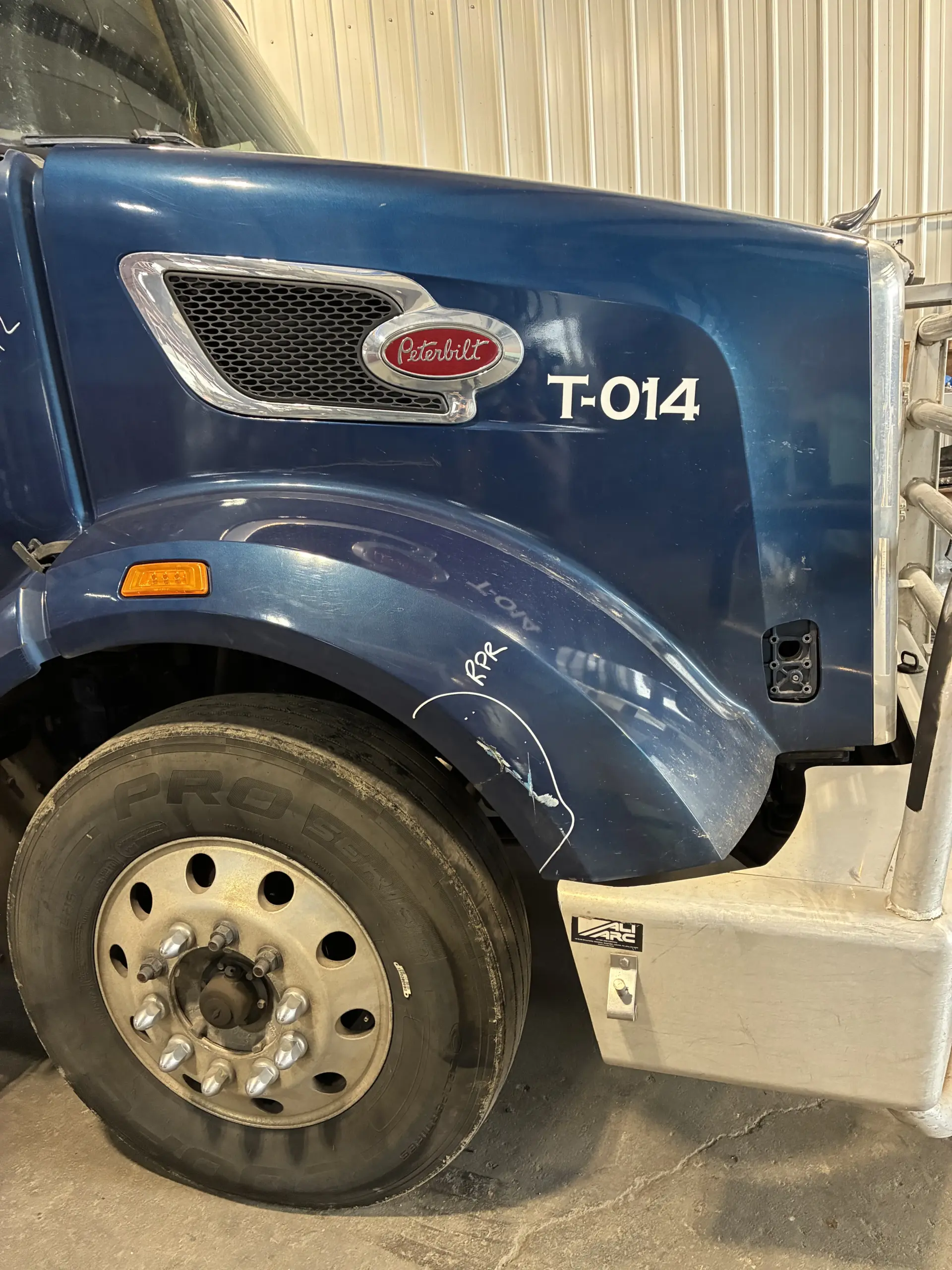
After a semi-truck collision in Colorado, the next steps involve documenting the accident, initiating an insurance claim, notifying the appropriate carrier representatives, and arranging a professional damage assessment. For owner-operators and fleet managers, organized records and coordinated repairs can help simplify the claims process, identify necessary repairs, and minimize avoidable vehicle downtime.
Key Takeaways
- Organize accident documentation: Gather the accident report, photographs, vehicle information, and relevant incident details for insurance and repair coordination.
- Initiate the insurance claim: Contact the appropriate insurance representative, provide requested documentation, and clarify the claim and repair authorization process.
- Complete carrier reporting: Follow company procedures and determine whether applicable FMCSA accident-recordkeeping requirements apply.
- Schedule a professional damage assessment: Heavy-duty truck collisions may involve frame alignment, structural components, body panels, and mechanical systems.
- Choose a qualified commercial repair facility: Confirm the shop’s capabilities, replacement-part compatibility, and communication procedures before authorizing repairs.
What Should You Do After a Semi-Truck Collision?
Once the immediate incident has been addressed, focus on five priorities: (1) organize accident documentation, (2) notify your insurance provider and carrier, (3) complete applicable reporting requirements, (4) arrange a professional damage assessment, and (5) coordinate repairs with a qualified heavy-duty collision repair facility.
These steps help owner-operators and fleet managers move from accident reporting to informed repair decisions.
Gather and Organize Accident Records
Start by collecting all available documentation associated with the collision. This may include an accident report, photographs, driver information, insurance details, and relevant company records.
Organize the information in one location so it can be shared with insurance representatives, fleet personnel, and repair professionals as needed.
Contact Your Insurance Provider
Notify the appropriate insurance representative and begin the claims process according to your policy and company procedures.
Ask what documentation is required, how the damage assessment should be handled, and whether repair estimates or authorizations are needed before work begins.
What Documentation Is Needed for a Semi-Truck Insurance Claim?
Commercial truck insurance claims may require vehicle identification, accident details, damage photographs, and supporting records. Requirements vary by insurer, policy, and incident circumstances.
| Documentation | Information to Include | Why It Matters |
| Accident report | Report number, responding agency, available findings | Provides an official incident reference |
| Vehicle identification | VIN, license plate, unit number, truck and trailer details | Identifies involved equipment |
| Accident details | Date, time, location, travel direction, incident description | Establishes claim context |
| Damage photographs | Multiple views of affected components and assemblies | Supports damage evaluation |
| Driver and witness information | Available names, contact information, insurance details | Supports claim communication |
| Maintenance records | Relevant inspection and service history | Provides vehicle condition context |
| Repair documentation | Estimates, inspection findings, invoices | Supports repair coordination |
Fleet managers may also need to preserve dispatch records, relevant electronic data, and internal incident reports.
Keep copies of submitted documentation and maintain a record of communication with insurance representatives and repair facilities.
How Do FMCSA Reporting Requirements Affect Commercial Truck Accidents?
Federal commercial vehicle accident-recordkeeping requirements depend on the circumstances of the incident and the motor carrier’s obligations. Not every semi-truck collision meets the criteria for federal accident-register documentation.
Under 49 CFR § 390.15, motor carriers must maintain an accident register for qualifying accidents involving their commercial motor vehicles.
Qualifying incidents generally involve a fatality, an injury requiring medical treatment away from the accident location, or disabling vehicle damage requiring transportation by a tow truck or another motor vehicle.
Additional requirements may apply depending on the incident, including those established under 49 CFR § 382.303 for certain post-accident alcohol and controlled-substance testing situations.
Owner-operators and fleet managers should coordinate with the appropriate carrier personnel or compliance professionals to determine applicable obligations.
Organize Carrier and Insurance Reporting
- Insurance notification: Contact the appropriate insurer and obtain claim instructions.
- Company reporting: Complete required internal accident documentation.
- Record preservation: Retain relevant reports, photographs, and vehicle records.
- Regulatory compliance: Determine which federal and state recordkeeping requirements apply.
- Claims coordination: Track estimates, authorizations, and communications related to repairs.
Why Is a Professional Semi-Truck Damage Assessment Important?
Heavy-duty collision damage may extend beyond visible dents, broken panels, or damaged paint. A professional assessment helps identify structural, mechanical, and body damage that can influence repair requirements, replacement-part selection, and vehicle operation.
Fleet Collision Services provides specialized commercial truck collision and body repair from its facility in Greeley, Colorado.
Common Commercial Truck Collision Damage Areas
| Damage Area | Potential Problems | Assessment Considerations |
| Frame and structural members | Distortion, cracks, misalignment | Structural measurements and repair feasibility |
| Hood and mounting assemblies | Cracks, poor fitment, damaged hinges | Repair versus compatible replacement |
| Bumpers and grilles | Deformation, damaged mounting supports | Component integrity and compatibility |
| Steering and suspension | Damaged components, altered geometry | Qualified mechanical evaluation |
| Paint and exterior surfaces | Coating damage, exposed substrates | Surface preparation and refinishing |
| Lighting and electrical systems | Broken assemblies, damaged wiring | Functionality and necessary repairs |
Expert Repair Insight: Look Beyond Visible Damage
A commercial truck’s exterior appearance does not always reveal the full extent of collision damage.
For example, a damaged hood may also require evaluation of its hinges, mounting points, and surrounding structures. Similarly, an impact affecting body-panel alignment may warrant additional structural inspection.
A comprehensive assessment should consider frame alignment, structural integrity, body-panel fitment, refinishing requirements, and replacement-part compatibility before repair decisions are finalized.
How Can Fleet Managers Coordinate Repairs and Reduce Downtime?
Effective collision repair coordination starts with a documented repair scope, clear communication, and an understanding of parts requirements.
For commercial operators, vehicle downtime can affect dispatch schedules, equipment availability, and operating expenses. Planning ahead helps reduce avoidable delays without compromising necessary repairs.
Establish a Commercial Truck Repair Plan
- Damage assessment: Obtain a professional inspection identifying necessary repairs.
- Repair authorization: Confirm the proposed scope and applicable insurance approval procedures.
- Parts compatibility: Verify replacement components against the truck’s manufacturer, model, and configuration.
- Operational planning: Evaluate replacement equipment and adjust dispatch schedules when necessary.
- Progress communication: Establish expectations for repair updates and additional findings.
Consider Replacement Parts and Availability
Heavy-duty truck collision repairs may require replacement hoods, bumpers, grilles, fairings, and other vehicle-specific components.
Fleet Collision Services offers Guardian Heavy Duty aftermarket collision parts, including replacement hoods and related components.
Our Greeley warehouse stocks heavy-duty collision parts, including hoods, which may help reduce shipping-related delays and expenses when compatible components are available.
Our loaner hood program may also allow eligible customers to continue operating their trucks while qualifying hood repairs are completed, subject to compatibility, safety requirements, and program availability.
How Do Northern Colorado Transportation Routes Affect Repair Coordination?
Commercial truck owners operating throughout Northern Colorado and Southern Wyoming often need to coordinate repairs around regional freight routes and equipment schedules.
Fleet Collision Services is headquartered in Greeley, with access to US Highway 85, US Highway 34, and Interstate 25. These corridors connect commercial transportation operations throughout the region, including Fort Collins, Denver, and Cheyenne.
Colorado and Southern Wyoming’s seasonal hail, snow, ice, and road debris can also contribute to exterior damage and refinishing needs.
For owner-operators and fleet managers traveling these routes, selecting a commercial repair facility with appropriate vehicle capacity and replacement-part resources can simplify repair planning.
Fleet Collision Services serves customers throughout Colorado, Southern Wyoming, and nationwide from its Greeley location. Repair arrangements and service availability should be confirmed directly.
What Should You Look for in a Commercial Truck Collision Repair Facility?
A commercial truck collision repair facility should have the equipment, physical capacity, and technical capabilities appropriate for the vehicle and its damage.
Heavy-duty trucks may require specialized structural assessment, large-vehicle body repair, fabrication, refinishing, and compatible replacement parts.
Fleet Collision Services: Commercial Truck Repair in Greeley
Our Greeley facility includes approximately 12,000 square feet of workspace, 10 repair bays, and a 60-foot downdraft paint booth designed to accommodate large commercial vehicle refinishing projects.
We provide commercial collision repair, body repair, frame repair, fabrication, complete restorations, and painting and refinishing services.
Through Guardian Heavy Duty, we also offer locally stocked aftermarket collision components for compatible heavy-duty trucks.
When evaluating a repair provider, consider:
- Commercial vehicle experience: Familiarity with heavy-duty trucks and specialized body components.
- Facility capacity: Equipment and workspace appropriate for large vehicles.
- Structural assessment: Ability to evaluate damage and coordinate appropriate repairs.
- Parts resources: Access to compatible replacement components.
- Repair communication: Clear estimates, authorization procedures, and progress updates.
You can read our local client reviews in Greeley when evaluating Fleet Collision Services.
Frequently Asked Questions
What should I do after a semi truck accident in Colorado?
After the immediate incident has been addressed, organize accident records, notify your insurance provider and carrier, and complete applicable reporting requirements. Arrange a professional damage assessment and coordinate repairs with a qualified commercial truck collision facility.
What documents do I need to file a semi-truck insurance claim?
Common documents include the accident report, vehicle identification, damage photographs, driver information, and relevant incident details. Your insurance representative may request additional records, inspection findings, or repair estimates depending on the claim.
Can semi-truck frame damage be repaired?
Some frame damage may be repairable depending on its severity, location, structural condition, and applicable manufacturer requirements. A qualified structural evaluation helps determine the appropriate repair approach.
Where can I get commercial truck collision repair in Northern Colorado?
Fleet Collision Services provides heavy-duty truck collision, body, and frame repair at its Greeley, Colorado facility. Call (970) 356-2208 to discuss your vehicle’s damage, repair needs, and available service options.
Fleet Collision Services is a commercial truck collision and body repair company headquartered in Greeley, Colorado, serving fleet managers, trucking companies, independent owner-operators, and commercial vehicle owners throughout Colorado, Southern Wyoming, and across the United States. We provide specialized commercial vehicle body repair, collision repair, frame repair, painting and refinishing, complete restorations, fabrication, hail repair, and related services for heavy-duty and commercial vehicles. Our Guardian Heavy Duty offering includes aftermarket collision parts such as replacement hoods, bumpers, grilles, fairings, and other components, while our loaner hood program supports eligible customers with specific hood replacement needs. Our Greeley facility is equipped for large commercial vehicle repairs, including a 60-foot downdraft paint booth.